Last weekend, Democratic governors gathered with lobbyists for major tech and artificial intelligence companies at a luxury resort in Phoenix, according to an attendee list for the Democratic Governors Association’s annual meeting that was obtained by Sludge.
The closed-door conference came as President Trump was finalizing an executive order designed to block states from enforcing AI safety laws, a step that would undermine laws that many Democratic states have already enacted. Despite the direct threat to their authority, Democratic governors have remained mostly silent on the measure, even as their Republican counterparts have spoken out strongly against it.
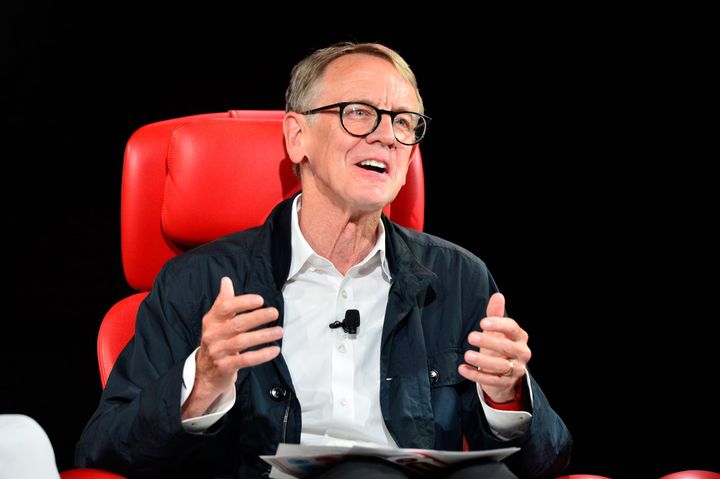
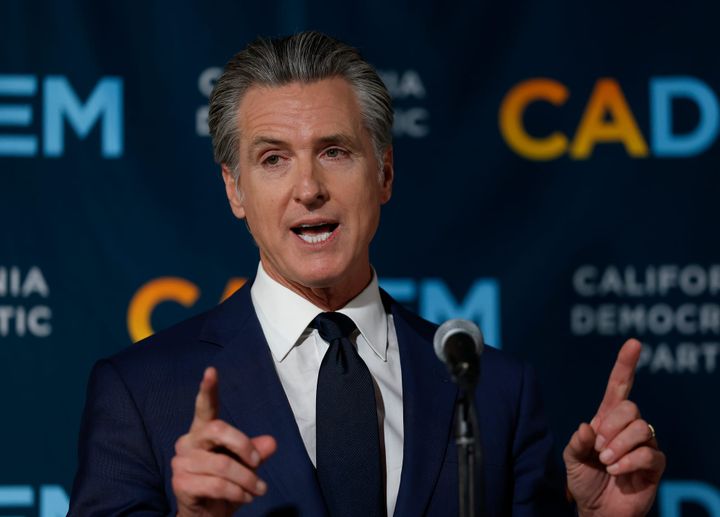
The DGA conference, held at the Prohibition-era Biltmore Hotel, featured several Democrats who are teasing White House bids in 2028 or rumored to be in the mix, like California Gov. Gavin Newsom, Michigan Gov. Gretchen Whitmer, Kentucky Gov. Andy Beshear, and Maryland Gov. Wes Moore. Arizona Gov. Katie Hobbs, who is up for reelection next year, and Gov.-elect Mikie Sherrill of New Jersey were also at the meeting, as well as gubernatorial candidates like former Rep. David Jolly in Florida.
On Thursday, Trump signed an executive order that aims to curtail the ability of states to regulate AI. Dozens of states have passed AI legislation this year designed to protect people from abuses like “deepfakes” in elections and nonconsensual impersonations. The executive order instructs Attorney General Pam Bondi to create an AI Litigation Task Force to wield lawsuits against states with more restrictive AI policies in place, and threatens noncompliant states with having federal broadband funding revoked.
OpenAI, Meta, and Waymo, companies at the forefront of the industry’s lobbying for federal preemption of state AI laws, sent key lobbyists and government affairs specialists to the DGA event. Chan Park, who became OpenAI’s first federal lobbyist in 2023 and is the company’s head of U.S. & Canada policy & partnerships, was on the attendee list. A former general counsel with the Senate Judiciary Committee, Park and other OpenAI lobbyists have been lobbying Congress, the Department of Commerce, and the White House office this year on AI issues, according to disclosures. OpenAI’s President Greg Brockman has reportedly bankrolled the super PAC Leading the Future, which says it has raised $100 million to knock off candidates it deems unsupportive of the AI industry.
Meta had two public policy attendees at the DGA gathering, according to the list: James Hines, who lobbies for the company in Texas; and Mona Pasquil Rogers, director of California public policy for Meta and a former adviser to Newsom, who has a rolodex of Sacramento’s political world. Meta’s new super PAC, the American Technology Excellence Project (ATEP), plans to take aim at state politicians it views as critical of the industry.
Waymo, an Alphabet subsidiary, had a pair of government affairs staff listed as attending the DGA meeting, Matthew Walsh and Ishtpreet Singh. Alphabet has been openly pushing the Trump administration to preempt state laws, including in a March blog post from its President of Global Affairs Kent Walker that calls for a federal “risk-based approach” that relies on existing regulations.
A slew of other Big Tech lobbyists and public policy leads were also on the list of DGA attendees, including five from Amazon, three from Microsoft, two from Google, and two from Salesforce. Other technology companies rubbing shoulders in Phoenix included Coinbase, DoorDash, Rivian, Snap, and Stripe, as well as Intel, Oracle, and internet service provider Lumen Technologies.
Congressional Republicans floated federal AI preemption in two major legislative packages this year. The first was the GOP’s budget reconciliation bill, where a July 1 amendment banning states from taking action on AI was overwhelmingly struck down by the Senate. A second was the recent defense policy bill, known as the NDAA, where the measure was stripped out due to opposition from key Republicans at the federal and state levels.
Dem Governors Mum on Federal AI Preemption
While Democratic governors were silent, their Republican counterparts have been loudly arguing for months against the federal government preempting state AI policies, In June, 17 Republican governors sent a letter to Senate Majority Leader John Thune and House Speaker Mike Johnson warning them against preempting their states’ protections on AI use. Over the past couple months, a trio of Republican governors—Spencer Cox (Utah), Ron DeSantis (Florida), and Sarah Huckabee Sanders (Ark.)—continued to make known their opposition to the Trump administration’s executive order.
Some opposition to federal preemption has emerged from Democratic-led states, though not from governors in the month-long lead-up to Trump’s executive order. In May, 40 state attorneys general, including those of California and New York, sent a letter to congressional leaders urging them against a ban on AI regulation.
Earlier this month, over 30 California-based organizations joined a letter from the accountability nonprofit TechEquity calling on Newsom, California Attorney General Rob Bonta, and legislative leaders to publicly stand against the Trump administration’s limiting of state AI guardrails. “Blanket federal preemption fails to recognize the vital role of states like California and would shut down the democratic exchange that fuels sound policy development,” they wrote.
Last year, Newsom vetoed far-reaching AI regulations introduced by state Sen. Scott Wiener (D). On Sept. 29, Newsom signed into law Senate Bill 53, led by Wiener, that incorporates input from AI giants like OpenAI, stemming from a panel formed at Newsom’s direction. In a statement yesterday, Newsom called out the “corruption” of Trump’s just-signed AI order, touting his state’s industry partnerships with companies like Nvidia and Google.
This week, New York Gov. Kathy Hochul (D) proposed drastic overhauls to the RAISE Act, a bill passed overwhelmingly by the state legislature in June and described by its sponsor, Sen. Andrew Gournardes, as proposing “landmark” AI safety measures. The bill would require large AI developers, those spending more than $100 million, to publish detailed safety standards and security protocols that reduce risks of harm, among other things. Going further, it would prohibit companies from releasing AI models that pose an “unreasonable risk of critical harm,” a restriction cut from Hochul’s version. Hochul’s wholesale changes to the RAISE Act bring it in line with California’s lighter-touch SB 53.