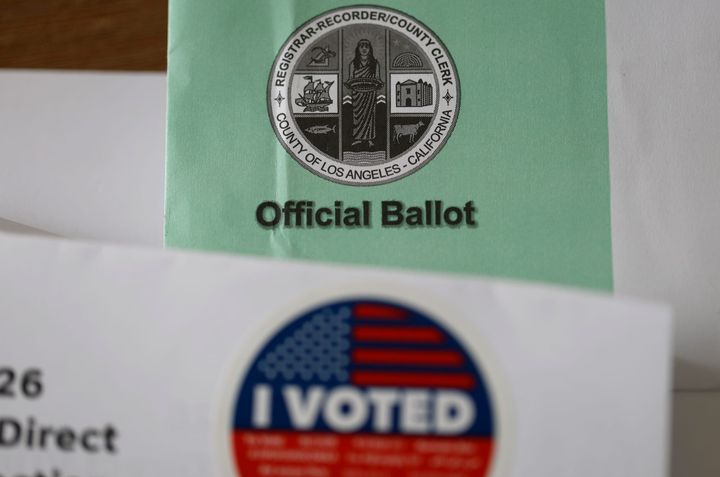
More than $1 billion has been spent on California state races since 2020, according to supporters of Proposition 4, which asks California voters next month whether to allow public financing of campaigns.
A coalition of groups including the League of Women Voters (LWV) of California says the proposition would give voters a way to reduce the role of wealthy donors and large corporations in state and local elections.
The measure would repeal a 1988 ban on public campaign financing and let the state of California, its counties, and all cities statewide create programs that match small donations with public funds, helping candidates run for office competitively without relying on wealthy backers.
The campaign endorsing Prop 4 is co-chaired by the LWV of California, California Common Cause, and the California Clean Money Action Fund, and is backed by nurses’ and teachers’ unions, the ACLU of California, environmental groups including Sierra Club California, and the California Democratic Party.
“The amount of money in politics is outrageous and it’s corrupting our democracy,” Trent Lange, executive director of the California Clean Money Action Fund and co-chair of the Yes on 4 campaign, told Sludge. “All that fundraising buys access for the wealthy special interests while shutting out the rest of voters. We need to change the way we finance election campaigns so politicians focus on the needs of the voters and their constituents rather than the needs of their Big Money donors.”
The ban goes back to a June 1988 ballot initiative that prohibited the use of public funding in campaigns, a step intended to reduce money in politics. Courts later said that the ban did not apply to cities that have their own charters: “That’s why five charter cities in California—Los Angeles, San Francisco, Oakland, Berkeley, and Long Beach—have good public financing systems that empower voters and candidates,” Lange said. But the ban still applies to the state’s 361 general-law cities and more. “Every general-law city, every county, every district, and the state itself is completely banned from having public financing, no matter how much they might want it," he said.
Among Prop 4’s endorsers are Gov. Gavin Newsom and other Democrats in the state legislature, who voted to put the proposition in front of voters through SB 42, with every state Senate Democrat present voting in favor.
The option of running a competitive campaign on small-dollar contributions has been shown to have diversified the candidate pool in New York City and Seattle, and is offered in dozens more states and localities, where advocates say it dramatically reduces the need to rely on wealthy campaign donors in runs for office.
Prop 4 would not itself create any new voluntary public campaign financing programs, but rather give jurisdictions the option to set up their own systems, in accordance with the measure’s requirements. Participating candidates must meet qualifying criteria and agree to spending limits, and public funds cannot be used for personal legal defense, fines, or repaying loans. Also, in what Lange underscores as an important safeguard, programs cannot discriminate against challengers in favor of incumbents. The measure would also triple the maximum fines for illegal foreign campaign contributions.
Public campaign financing programs have been bolstered in California's large cities in recent years. In 2018, only two of the 15 members of the Los Angeles City Council were women. That year, the council voted to strengthen the city’s program of public matching funds for participating candidates, raising the match for small contributions to 6-to-1. Under the new ratio, small donations—up to $114 per contributor in 2019—could be amplified for up to $684 in public funds for qualifying candidates. "Now there's eight women on the city Council, all of them elected using the public financing system,” Lange said of Los Angeles’ first-ever majority of women.