Stocks

Trump Bought Hundreds of Stocks the Day Before He Paused Tariffs and Sparked a Historic Rally

By Donald Shaw,

Published on Jul 1, 2026   —   4 min read

STOCK ActtariffsPresident Trump
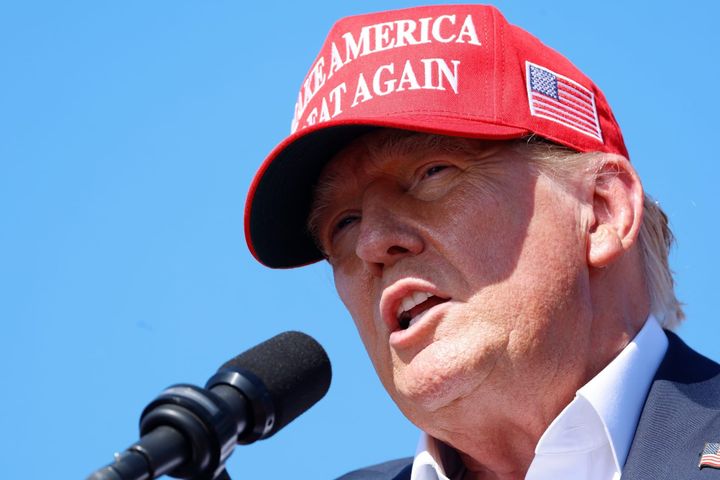
President Donald Trump speaks during a campaign rally on June 28, 2024. (Anna Moneymaker/Getty Images)

Summary

The trades weren't made public until yesterday, more than a year later than required by law.

💡
Share this on X and Bluesky!

The day before President Trump announced a 90-day pause on his sweeping tariffs, sending markets exploding higher, his investment accounts quietly purchased hundreds of stocks near the market low, trades that were not publicly disclosed until more than a year later despite federal disclosure requirements.

The purchases, finally disclosed in a 927-page annual financial disclosure filed with the Office of Government Ethics on Monday, reveal a churn of transactions that was quietly playing out all last year: Trump's accounts were actively trading stocks throughout 2025 while he was making policy decisions that moved markets, and the public had no idea.

On April 8, 2025, the day before Trump announced the tariff pause, the disclosure shows 327 individual stock purchases worth as much as $12.8 million, one of the largest single-day stock buying sprees disclosed in the filing. The purchases included Apple, Microsoft, Nvidia, Amazon, and Alphabet, each valued as much as $250,000, along with scores of other companies. The S&P 500 jumped nearly 10% the following day when Trump announced the pause, one of the largest single-day gains in the index's history.

Federal ethics law requires executive branch officials, including the president, to publicly disclose securities transactions worth more than $1,000 within 45 days on forms known as periodic transaction reports, or 278-Ts. The requirement exists so the public can monitor whether officials are trading in companies affected by their own decisions. 

Trump filed no such reports covering the April trades—or virtually any of the thousands of stock trades his accounts executed throughout 2025. A note from an OGE reviewer on the cover page of the annual filing states: "The filer paid late filing fees related to transactions not previously reported on 278-Ts." The late fee under federal law is capped at $200.

“It is critical that the public and the press have a full accounting of the financial holdings, investments and stock transactions of senior public officials,” said Craig Holman, a government ethics expert with Public Citizen. “These officials are in a unique position of having access to inside information about economic and business trends, offering a prime opportunity for insider trading. Worse yet, they are also in a position of being able to manipulate those economic and business trends for self-enrichment.”


The annual filing covers thousands of transactions spanning the full calendar year, with purchases and sales in hundreds of individual companies. The only periodic transaction reports that Trump filed in 2025 show transactions in municipal and corporate bonds, which carry far less potential for conflicts, as presidents’ day-to-day decisions do not move bond markets the way they can move individual stocks.

The trades ahead of the tariff pause are not the only ones with propitious timing. On August 18, the accounts purchased Intel stock valued between $250,000 and $500,000—four days before Trump announced that the federal government would take a nearly $9 billion equity stake in the chipmaker, sending Intel shares up roughly 6%. The Intel CEO had met with Trump at the White House on August 11, a week before the purchase, after which reports first emerged that the administration was considering a government equity investment in the company.

The accounts also purchased Palantir Technologies repeatedly throughout the year while the Trump administration was expanding Palantir's federal contract portfolio, including contracts with Immigration and Customs Enforcement. GEO Group, the private prison company and major ICE contractor, was purchased on at least 10 separate dates across the year while the administration expanded immigration detention capacity.

The White House has maintained that the accounts are managed by independent financial institutions, and that the president plays no role in individual investment decisions. A White House spokesperson told CNN in January that Trump’s accounts were invested through "computer-based model portfolios that automatically replicate recognized indexes, such as the Schwab 1000," and that "neither President Trump nor any member of his family has any ability to direct, influence, or provide input regarding how the portfolio is invested or when investments are bought or sold." 

Unlike other executive branch officials, presidents are exempt from the conflict-of-interest statutes that require recusal from matters affecting their personal finances. But they are not exempt from the timely disclosure requirements. 

“The STOCK Act imposes a minor $200 penalty for lack of timely disclosure per stock transaction,” Holman said. “This penalty may even be waived or reduced by ethics officials, assuming no intent to cause harm. Tougher criminal penalties are allowed under the STOCK Act for insider trading violations, but not for lack of disclosure.”

The disclosure also reveals that Trump earned more than $1.4 billion from his cryptocurrency ventures in 2025, including $635 million in royalties from his $TRUMP memecoin and more than $500 million from World Liberty Financial, while his administration was appointing crypto-friendly regulators, creating a strategic Bitcoin reserve, and signing the GENIUS Act stablecoin bill.

Share on Facebook Share on Linkedin Share on Twitter Send by email

Unlock exclusive content with a free trial

Get unlimited access to in-depth investigative reports with a 14-day free trial. Cancel anytime.

Subscribe