President Trump sent an awaited-for-months supplemental funding request for the Iran War to Congress on Wednesday, seeking $87.6 billion in a package that is headlined by $67.1 billion for the Department of Defense’s “urgent needs” in “Operation Epic Fury.”
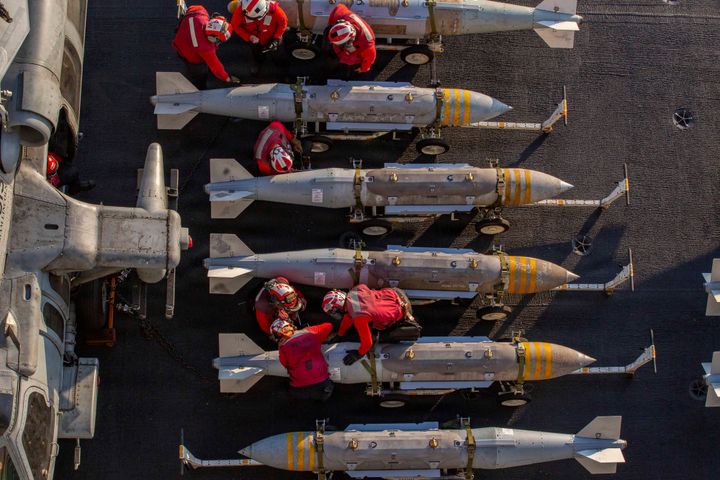
Of that amount, a proposed $21 billion would replenish munitions spent in the Iran attacks, most of which are made by a pair of giant weapons contractors: Lockheed Martin, which has been showering millions of dollars on Trump’s political groups since his return to office, and RTX.
A May report from the think tank Center for Strategic and International Studies (CSIS) details several key munition stockpiles that need to be rebuilt, including Lockheed-made THAAD interceptors and Patriot missiles, and RTX-made Tomahawk missiles and Standard Missiles.
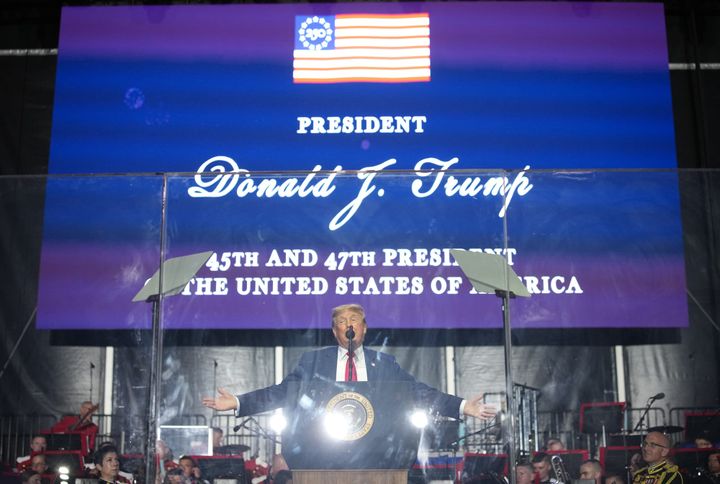
Both Lockheed and RTX are among the 21 corporate sponsors of Freedom 250, the company established by Trump’s executive order to help fund his Fourth of July festivities—a list that includes other defense contractors set to profit from the war like Palantir, Boeing, and Northrop Grumman.
The package also includes $11.1 billion in aid to American farmers, whose businesses have been hit by Trump’s trade policies, and $1.4 billion to combat the Ebola outbreak in Central Africa.
This week’s request is one maneuver among several that the Trump administration is using to steer more funding into the ever-rising Pentagon budget. In April, the administration released plans for a massive $1.5 trillion defense budget for Fiscal Year 2027, marking a 44% increase over the already record-high amount of defense funding this year. It would consist of a $1.15 trillion defense base budget request—just approved by House appropriators along party-line votes—combined with $350 billion in a potential reconciliation budget bill to be passed by Republicans.
On top of those immense funding vehicles, the new supplemental package’s nearly $88 billion sticker price is lower than the $200 billion that the Trump administration was considering in March to recoup costs from the Iran War. Still, the request sets the stage for a further infusion of weapons spending after U.S. missile stocks have been drastically depleted.
The Trump administration and Republicans in Congress have cut spending on public assistance as they inflate the Pentagon budget—and as American households have borne more than $100 billion in Iran War costs, according to Moody’s Analytics. The “One Big Beautiful Bill Act” (OBBBA) signed by Trump last year made cuts and added restrictions to food stamps, resulting in more than 4.7 million people nationwide losing Supplemental Nutrition Assistance Program (SNAP) benefits. Sweeping changes to Medicaid rules that arrive in 2027 will restrict access and could cause 10 million people to lose health insurance.
The supplemental request, sent from White House Office of Management and Budget Director Russell Vought to House Speaker Mike Johnson, faces several major obstacles in Congress. Senate Democrats like Patty Murray (Wash.), ranking member of the Appropriations Committee, panned the request for the unauthorized Iran War and said that the Pentagon was sitting on over $100 billion in unspent funding from last summer’s OBBBA. Sen. Chris Murphy (Conn.) doubted the request had a Democratic supporter, which would make it difficult to reach the 60-vote cloture threshold in place in the Senate since 1975. If the bill were to advance, Republicans would face a vote, as the midterms approach, to pile more funding into the Iran War, which a vast majority of Americans want to see ended, according to recent polls. Moreover, earlier this week the Senate changed course and passed, for the first time, an Iran war powers resolution by a vote of 50–48, joining the House in adopting the measure earlier this month that expresses disapproval of the conflict. House Democrats say they will explore legal challenges stemming from the measure.
Also this month, Democrats on the House and Senate Armed Services Committees signaled displeasure with the eye-watering funding hike in the National Defense Authorization Act (NDAA) now being considered. Rep. Seth Moulton (D-Mass.) introduced an amendment to cut $150 billion from the top-line number—mirroring the amount of defense spending increase enacted in the OBBBA—that was defeated 25–31, but received support from nearly all Democrats on the panel. A similar amendment from Sen. Mark Kelly (D-Ariz.) was backed by the committee’s Democratic members as well as Independent Sen. Angus King (Maine), and was narrowly defeated by a vote of 13–14, according to policy analyst Gabe Murphy of Taxpayers for Common Sense.
“Trump and Hegseth’s $88 billion Iran War supplemental funding bill is a sign of their desperation,” said Sunjeev Bery, campaign director for People Over Pentagon at the watchdog group Public Citizen. “The American public wants no part in Trump’s illegal war, and members of Congress are increasingly rejecting White House proposals to dramatically increase Pentagon funding. The fact that Trump and Hegseth would attempt to seek additional Pentagon funding by attaching it to this extraordinarily unpopular and devastating war is a demonstration of how bad their other options are for driving their reckless $1.5 trillion Pentagon budget.
“Republican senators have already balked at Trump’s push for a $350 billion military funding increase via a reconciliation bill,” Bery told Sludge. “And Democrats in both the House and Senate have voted to cut $150 billion from Trump’s Pentagon budget bill. So now Trump and Hegseth are circling back to their other bad idea—asking Congress and the American people to fund a war that they largely oppose and never wanted to begin with.”
Though Vought’s request does not detail the munitions to be backfilled, Lockheed Martin—which has shown its willingness to donate to Trump’s White House causes—stands to be among the major beneficiaries. The same day that Vought’s request was sent, Lockheed announced a seven-year, sole-source contract award worth up to $35 billion to quadruple production of THAAD interceptors exhausted in the Iran War.