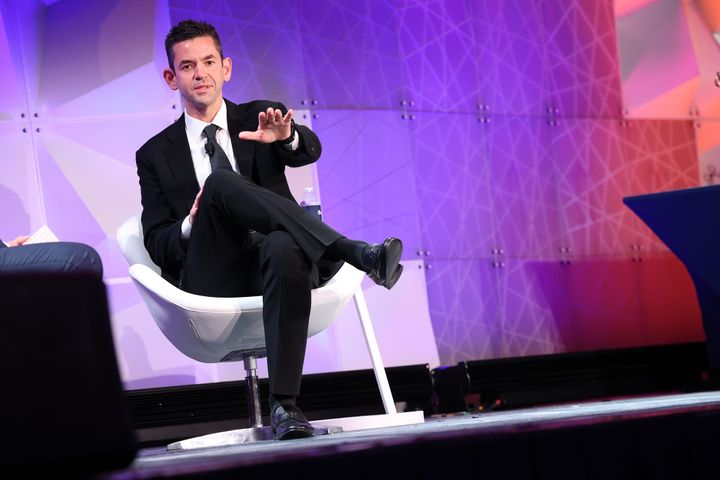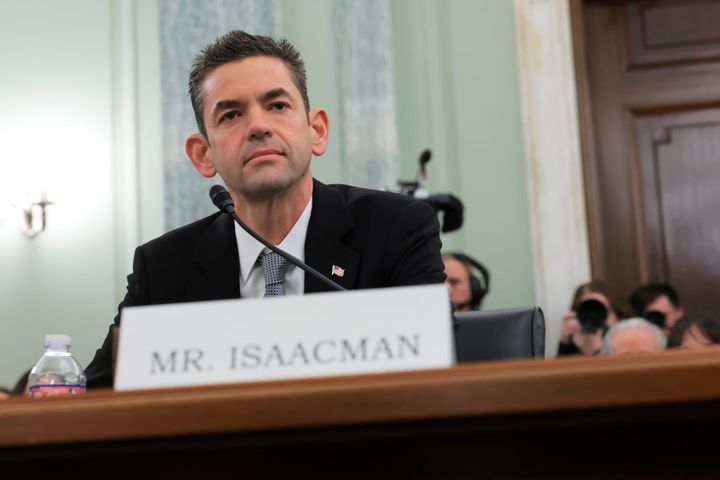
In November 2024, Elon Musk called his friend and business partner Jared Isaacman to ask him if he would lead NASA. A year and a half later, the agency had a new administrator, a new space nuclear strategy, and plans to develop the exact reactor technology that SpaceX says it needs to colonize Mars.
The arrangement is another clear example of private business interests shaping federal science and technology policy. Isaacman holds roughly $1 billion in a payments company whose international growth has been built on a partnership with SpaceX, and is now implementing a nuclear strategy that SpaceX has explicitly said it needs.
“NASA should be doing what the commercial industries can't,” Isaacman said in an interview last year. “And that, by the way, takes so much stress off a company like SpaceX trying to get to Mars.”
Musk and Isaacman’s relationship goes back several years. In 2021, Isaacman personally paid SpaceX for a civilian spaceflight mission. He then brokered a five-year strategic partnership to make Shift4, his financial technology company, the official payment processor for SpaceX’s Starlink satellite internet service. SpaceX was Shift4’s “cornerstone” client that would “open up a massive pool of global commerce opportunities,” the company said in a 2021 SEC filing.
Shift4’s total annual revenue more than tripled—from roughly $1.36 billion in 2021 to $4.18 billion in 2025—as Starlink subscription payments flowed. The company followed Starlink into Europe, Latin America, and Africa, and now operates in 75 countries.
“When people are paying for things on the Moon & Mars, Shift4 should be there too,” Isaacman posted on X the day the deal was announced.
Shift4 invested $27.5 million in SpaceX in early 2021, when the company was valued at around $74 billion. SpaceX is now expected to go public in June with a valuation of roughly $1.75 trillion—the largest IPO in history. Shift4 has not disclosed whether it still holds that stake—which could be worth around $650 million post-IPO—and did not respond to Sludge’s requests for comment.
Roger Myers, a top expert in space nuclear systems and former Aerojet Rocketdyne executive, explained to Sludge why SpaceX needs nuclear power: refueling a Starship on Mars would require megawatts of power to convert water and the Martian atmosphere to methane, and Mars' dust storms make solar unviable.
“By the time a Starship gets to Mars, it’s empty,” Myers told Sludge. “It has no fuel to come home. So if the astronauts aboard Starship want to come home, they need to be able to refuel Starship somehow.”
Myers co-authored a July 2025 Department of Energy study that put SpaceX’s nuclear needs on the public record. Among its private sector interviewees, the study noted, SpaceX in particular wanted reactors developed swiftly for Mars colonization: “With respect to Mars, SpaceX considers systems below 10kWe to be 'in the noise' and believes 80–100kWe class systems are where nuclear becomes interesting,” the study said. “SpaceX expressed confidence in landing on Mars as early as 2026 and desires a 100kWe-class reactor by 2028, followed by MW-class reactors 'as soon as possible thereafter.'"
The study provided three potential strategies for the Trump Administration. These include the "Chessmaster's Gambit" option, which proposed two reactor demonstrations up to 100 kWe, one led by NASA and the other by the military. The White House’s new space nuclear strategy, titled NSTM-3, aligns with this option, estimated to cost several billion dollars over five years.
Michael Kratsios, a Peter Thiel protégé who serves as Trump’s chief science and technology advisor, announced NSTM-3 alongside Isaacman at an April event. Under the plan, NASA and the Department of Defense will conduct parallel programs with industry contractors to rapidly develop space reactors—including at least one that meets the 100 kWe parameters SpaceX requested—for orbit as early as 2028 and for the Moon’s surface by 2030.
“Achieving these near-term objectives will establish technological viability essential to unlocking space exploration, commerce, and defense applications,” NSTM-3 states.
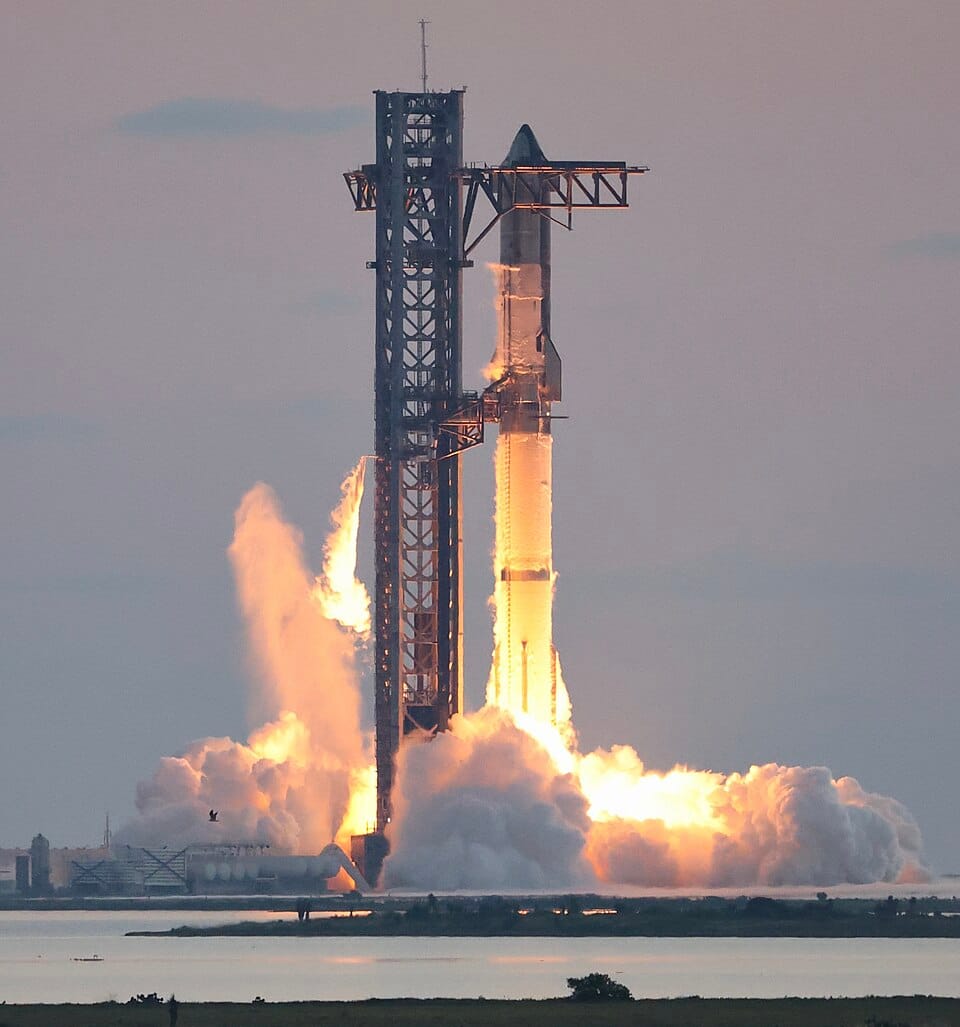
The Trump administration considers nuclear energy essential for its space commercialization and militarization goals. In the final days of his first term, President Trump signed an executive order to promote small modular reactors (SMRs) for space exploration, and in his second, the president has directed federal agencies to roll back nuclear safety oversight, cut commercial space launch regulations, and put a nuclear reactor on the Moon by 2030, which would power NASA’s proposed $20 billion lunar base.
The private sector was ready. Days before Trump’s second term began, a venture capital firm called Balerion Space Ventures hosted the Nuclear Energy, Space and Defense Tech Investor Summit at Mar-a-Lago, bringing Silicon Valley-backed nuclear and space startups together with government officials to discuss regulation and investment opportunities. Speakers included A.C. Charania, who was NASA’s Chief Technology Officer until April 2025, and is now a senior advisor at Balerion.
The VC firm canceled an interview with Sludge after being asked why they chose the president’s private club for the space nuclear investor meeting and if current or former officials helped them organize it.
Former NASA official Bhavya Lal moderated a discussion panel at the Mar-a-Lago event, according to photos and an agenda reviewed by Sludge. Lal helped shape Trump’s space nuclear policies in his first term and co-authored the July 2025 Department of Energy study with Myers to inform policy in his second.
The study was sponsored by Idaho National Laboratories director of advanced nuclear reactors Justin Coleman, who also moderated a discussion at Trump’s Palm Beach resort. Its private sector interviewees—at least 10 of whom attended the Mar-a-Lago summit—expressed strong interest in using nuclear systems to power commercial space ventures, such as orbital data centers. Nick Cummings, SpaceX’s senior director of government systems advanced development, was interviewed for the study in February 2025, and former SpaceX engineer Doug Bernauer was interviewed in March.
Bernauer founded Radiant Nuclear with the long-term ambition of “making the space reactor for Elon.” He began researching nuclear technology for Mars colonization under Musk’s direction and registered his nuclear startup Radiant while still employed at SpaceX. Shortly after Trump was elected, Bernauer posted on X asking Musk to use DOGE to "fix nuclear" for space travel, falsely claiming the NRC had not approved a new reactor design in 50 years.
Months later, CEOs of three SpaceX-linked nuclear startups, including Bernauer, were at Mar-a-Lago holding a panel discussion on nuclear regulation. A Radiant representative said she did not know if the firm was among the nuclear startups that helped draft the May 2025 executive orders that launched DOGE’s nuclear safety rollbacks. Scott Pace, who served as executive secretary of the National Space Council in the first Trump administration, told Scientific American that these rollbacks provided the “policy foundation” for NASA’s space nuclear objectives; Isaacman has similarly stated the EOs would help cut through bureaucracy.