The Department of Government Efficiency staffer who led the implementation of President Trump’s nuclear safety oversight rollbacks last year was simultaneously serving on the board of a venture capital firm backed by nuclear industry investors. He is one of multiple DOGE agents with financial ties to nuclear firms that benefited from the rollbacks, drawn from a Silicon Valley investor network that has long pushed to weaken nuclear safety regulation.
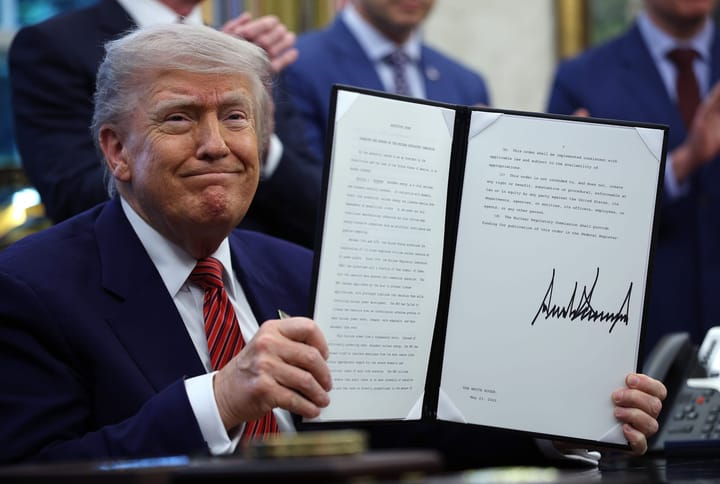
Last May, Trump signed four executive orders aiming to unleash a “nuclear renaissance.” The orders set aggressive goals to quadruple the nation’s nuclear power and accelerate the deployment of experimental reactor designs. The administration has since secretly rewritten safety rules, slashed environmental reviews, and plans to drastically cut inspections and severely weaken radiation protection standards.
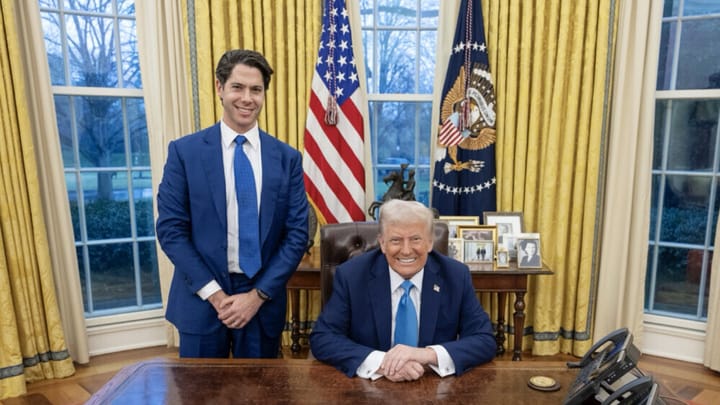
DOGE staffer Adam Blake was appointed in May to help implement Trump’s executive order to radically reform the Nuclear Regulatory Commission. Until December, Blake simultaneously served on the board of KCRise Fund, a venture capital firm funded by multiple nuclear industry players, positioning him to influence regulatory decisions affecting its investors.
KCRise’s limited partners providing investment include Evergy Ventures, the investment arm of utility Evergy, which operates Wolf Creek Nuclear Generating Facility in Kansas. It’s one of the Union of Concerned Scientists’ “Terrible 13” worst nuclear safety violators in the country. Evergy is working on partnerships with at least two Silicon Valley-backed nuclear startups, including Deep Fission, which began drilling in Parsons, Kansas this month to burrow a small reactor a mile underground. CEO David Campbell described the prospect of expanding nuclear power as a “generational opportunity” in a September CNBC interview with the head of Bill Gates’ small modular reactor startup TerraPower.
The fund’s other investors backing nuclear expansion include insurance firm Lockton and engineering company Burns & McDonnell, which has numerous nuclear customers and described the executive orders Blake implemented as a “critical effort for national security and competitive AI advancements.”
“The Nuclear Regulatory Commission has to remain independent for exactly this reason,” Union of Concerned Scientists' director of nuclear power safety Edwin Lyman told Sludge. “So you don’t have special interests getting favors from the federal government for their pet projects.”
Blake, who has served as a Department of Energy senior advisor since February 2025, did not respond to requests for comment. KCRise managing director Ed Frindt told Sludge that Blake and other board members served only as informal advisors without fiduciary duties to the fund or its limited partners. KCRise's website, however, states that investment decisions are made by its board—and the firm has funded at least two businesses Blake co-founded, including a June investment in an AI startup where he remains a board member.
KCRise did not respond to follow-up questions in time for publication about whether Blake participated in investment votes, received compensation during his five years with the fund, or whether the firm has any policies on board members holding concurrent government positions with regulatory authority over their limited partners. Evergy and KCRise’s other nuclear-affiliated investors did not respond to requests for comment.
Larry Criscione, one of over 400 employees who’ve left the NRC since Trump took office, worked at the agency for 16 years until he was forced into early retirement in December for making a LinkedIn post critical of agency management. As an NRC examiner, he told Sludge that DOGE-inflicted workforce cuts caused severe understaffing in his division. He noted nuclear industry groups—including Evergy—have lobbied to reduce the role of these NRC examiners.
“This is just one of the many areas where DOGE is allowing the utilities to water down their standards,” he said in an email.
Several elected officials have described DOGE’s role in nuclear energy policy as a flagrant violation of federal law. The Energy Reorganization Act of 1974 created a firewall between the Nuclear Regulatory Commission, an independent agency responsible for safety, and the Department of Energy, which promotes nuclear development. That separation was built to prevent regulatory capture. DOGE operatives, simultaneously shaping policy in both agencies, appear to have breached that boundary.
Blake served as Energy Secretary Chris Wright's "de facto proxy" in the NRC, according to Politico E&E, helping to carry out what Sen. Sheldon Whitehouse described as a “hostile takeover” of the independent agency. By last fall, at least seven DOGE operatives were extensively involved in NRC policy decisions, leading some staff to raise concerns about their potential conflicts of interest.
The NRC rejected Sludge’s FOIA request for information about DOGE’s activities at the NRC. The agency claimed “no staff from DOGE have been detailed to the agency,” and therefore there are no records—directly contradicting the testimonies of its leadership, elected officials, news outlets, and DOGE staffer Seth Cohen’s LinkedIn account. The NRC declined to explain the discrepancy. The DOE similarly did not answer how DOGE staff were legally authorized to lead operations at the NRC if none of them were formally detailed.
“They’ve been playing this shell game to avoid having to respond to FOIAs and having any accountability as to what they are or are not doing,” Center for Biological Diversity government affairs director Brett Hartl told Sludge. “They have consciously gamed the system to avoid being able to answer these basic questions—are they detailing? Are they employees?”
Hartl’s organization is one of numerous groups that have filed suits challenging DOGE’s refusal to answer FOIA requests and the constitutionality of its murky legal structure.
“These DOGE [staffers] have pushed out nuclear experts and directed the NRC to rip up and revise its regulations in a dangerously short timeframe,” Sen. Sheldon Whitehouse said at a December hearing. “That supposed transformation has only sown turmoil. It begs the question, who is behind the rush to a wholesale revision of its regulations within nine months. Who benefits?”
Blake is not the only DOGE operative with venture capital ties to companies benefiting from the regulatory rollbacks he helped engineer. Partners of DOGE-linked VC firms, such as Valor Equity Partners, Founders Fund, and Andreessen Horowitz, sit on boards of nuclear startups that have been selected for new pilot programs created by the executive orders that aim to accelerate commercial licensing.
A week after Aalo Atomics announced its participation in a pilot reactor program created by the executive orders, it closed a $100 million financing round led by venture capital firm Valor Equity Partners. Two of Aalo’s five board members are principals at the firm. Valor’s billionaire CEO Antonio Gracias is a former senior DOGE official and recruiter, a close friend of Musk, and a top investor and board member in his companies. According to court documents and SEC filings, Elon Musk and his brother Kimbal have themselves invested millions in Valor's funds.
Aalo Atomics’ CEO Matt Loszak credited DOGE for its instrumental role in reshaping U.S. nuclear policy in a December LinkedIn post, specifically commending Blake and two other DOGE staffers for helping create the executive orders. DOE chief counsel for nuclear policy Seth Cohen replied, “plenty more to come.”