When President Trump launched the “Make America Healthy Again” commission in February, he framed it as a generational fight against chronic diseases affecting American children, from obesity to developmental disorders, and vowed to take action on the toxins and environmental factors driving the crisis. Led by Health and Human Services Secretary Robert F. Kennedy Jr., the panel promised to root out corruption in public health policy, arguing in its May assessment that “corporate capture and the revolving door” had distorted scientific literature and regulations in ways that are harming children and contributing to increased morbidity.
But four months later, as the commission’s final strategy report came out calling for “EPA process improvements” rather than restricting any toxic chemicals, attention has turned to the possibility of corporate capture and undue revolving-door influence at a key office overseeing parts of the MAHA agenda. The Environmental Protection Agency’s Office of Chemical Safety and Pollution Prevention (OCSPP), which regulates pesticides and industrial chemicals, has been stacked with lobbyists, and reports indicate that its leadership has fought against the MAHA commission taking stronger action.
The top three officials appointed to the OCSPP since January all have backgrounds in chemical and pesticide industry lobbying, and they are on the verge of being joined by a fourth lobbyist who will serve as their boss. On July 30, the White House nominated Douglas Troutman, a longtime lobbyist and the recent interim co-CEO for the American Cleaning Institute, the trade group representing cleaning product manufacturers including BASF, Dow, and Procter & Gamble, to lead the office as assistant administrator for toxic substances.
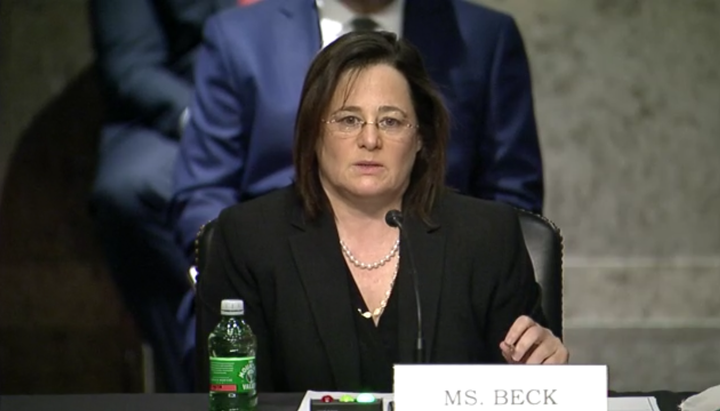
Concerns over the office’s deference to industry trace back to its leadership overhaul during the early months of the second Trump administration. Nancy Beck, a longtime American Chemistry Council (ACC) executive who served in the EPA during Trump’s first term, returned to the office in January as principal deputy assistant administrator, effectively running day-to-day operations. During her first EPA stint, Beck led efforts to rewrite chemical safety rules in line with industry positions and weakened restrictions on hazardous substances like asbestos and methylene chloride, according to an exposé by the New York Times. Her actions were criticized by environmental groups who argued that Beck may have violated federal ethics and conflict of interest rules due to her history working for the chemical industry lobby. Meeting records obtained by The New Lede through the Freedom of Information Act show that since her return in January, Beck has held dozens of meetings with chemical and agricultural industry representatives. While the documents indicate Beck has recused herself from meeting with the ACC, she was still listed as an attendee at meetings with several of the group’s member companies such as BASF, Lanxess, OxyChem, and Dow.